
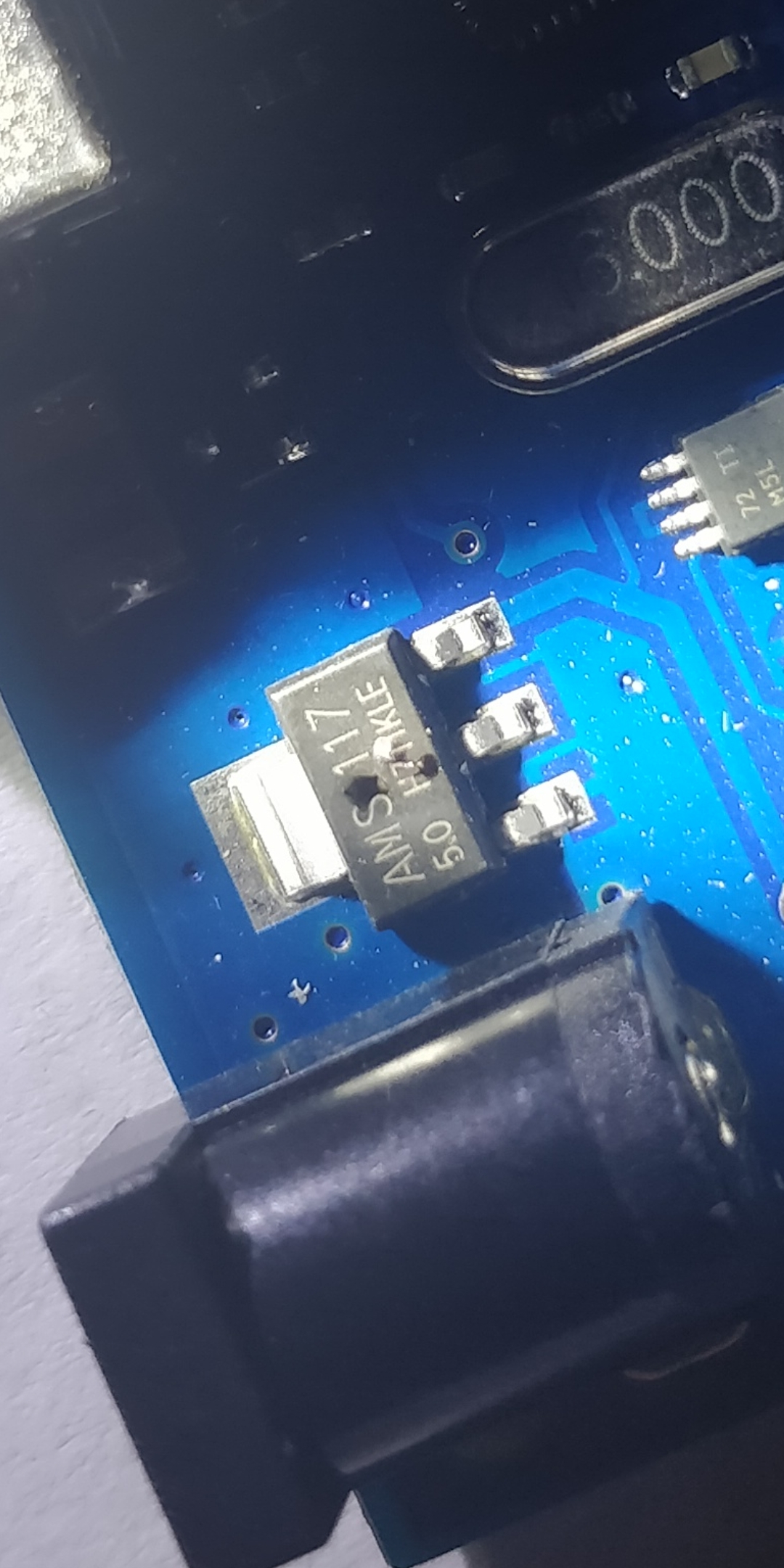
Story so Far: Alarm clock build parts arrived, currently experimenting to get the heater part working in order to prepare a cup of tea. A cartridge heater being used to heat copper tubing which is spiralled into a hot plate is the current technology.
TL;DR: I tried using the copper spiral as a hot plate with wood around it to insulate. The wood caught fire. I tried without the wood, the heater got aggressively red hot. I conclude that I want more thermal mass – ordered a block of steel into which the heater can be inserted.
Test number 2 of the prospective heater set up was a resounding failure. I had the heater inserted into its cradle and a metal cup of water placed on the copper spiral of a ‘hot plate’. Before testing though I figured the near-constant draught in the garage might become a problem. My thinking was that while heat should find it easiest to move from the copper into the base of the metal cup and heat the water, a constant flow of cool air around the heating set up will absorb a significant amount of that heat. To limit this, I surrounded the heater in wood; now the heat had two options for where to go: a metal cup or a wooden block; in my head this was a no-brainer . . . my head is a no-brainer.
I plugged the heater in and flicked the switch. “Hmm nothing’s happening, well, presumably the heater is working away, and I’ll just keep my ey – something smells good; like Christmas – no, something smells bad; like a burning project.” Something like that went through my head as the scent of pixie smoke and crushed dreams began to fill the garage. Pixie smoke? You might ask. Well, when you buy something like an Arduino, which is basically a little computer, there’ll be lots of little black boxes on them with circuitry that performs a specific function, allowing the little computer to work. These little boxes can contain some fairly complex circuits that do very simple things, however, doing simple things a few million times every second can trick us slow-thinking humans into thinking they’re doing very complex things. People that understand these tiny black boxes in an intimate way are very rare but people that use them every day certainly are not. Usually, when these boxes stop working it’s as a result of something getting too hot inside and melting which also melts the black plastic enclosure and gives off some very nasty smoke. So for all those people that use and break these boxes often but have no need or desire to learn how they work inside, the traditional pseudo-explanation is that they’re all simply enclosures for different kinds of magic pixie smoke which does a specific job. If that pixie smoke escapes, the little black box stops working. Some engineers and hobbyists are cool, though.
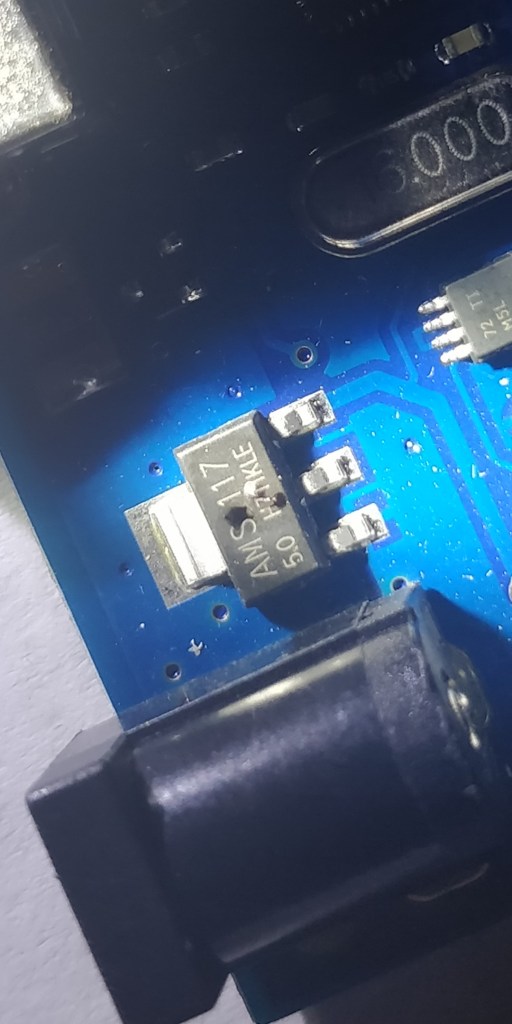
Having put this particular large wooden box together myself I was frustratingly aware of the fact that this smoke signal for failure I was accidentally sending out was not in fact a cloud with mystical properties, rather, it was the result of insulating a heater capable of reaching 300°C with wood. Wood, as luck would have it, generally catches fire at around 300°C. The more you know.
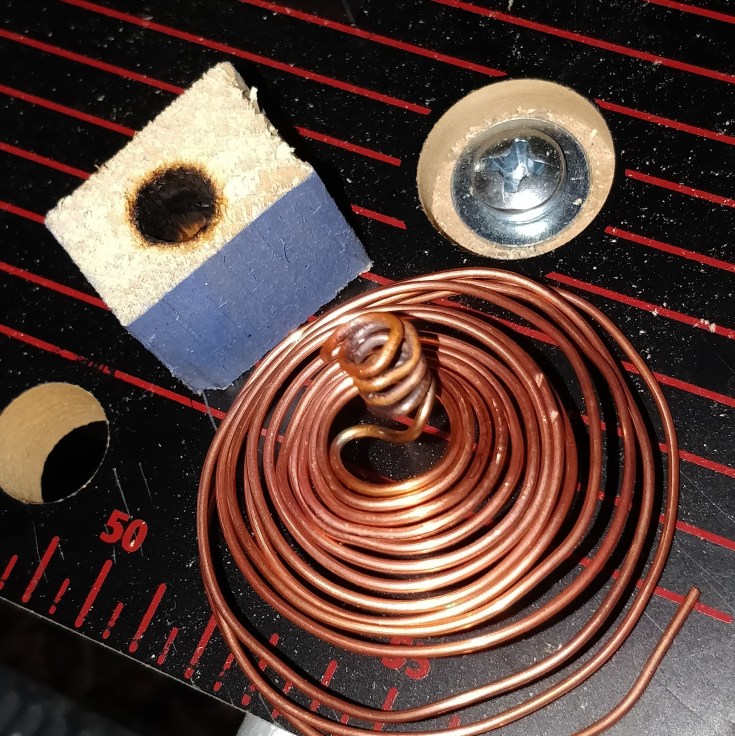
So, frighteningly aware of the fact that this smoke meant I had started a fire, I turned the heater off. Smart move. Smoke and burning persisted though. As you probably know, fire needs two things to burn – fuel and air (oxygen). It was only the inside of the wooden block which was in contact with the heater, so only that part was on fire at this early stage and the snugness of the fit meant that air flow to the embryonic blaze was pretty limited – even though it was surrounded by wooden fuel on all sides; ironically, it was this abundance of fuel that was preventing it from burning by limiting its access to oxygen. Had I Let It Be, it would have suffocated fairly quickly and died off. I didn’t, so it didn’t. Instead I decided to give it CPR, but, in my defence, you blow on a candle to put it out and I’m not sure I’ve ever had to fight a fire in any other situation. So, when I saw this small flame with ambitions of cooking all the food in my freezer (and the freezer too), I instinctively blew on it. It, in turn, instinctively flared up in exultation as it could finally take the breath it had been gasping for since its inception. I decided not to do that again. My second smart move of the day. Instead I watched the fire slowly suffocate and armed myself with a wet sock to finish the job if required, like some kind of sadist. The smoke brought a tear to my eye, but the death of the fire brought a smile to my face – nervous and disconcerted as it was.
Sometimes people that know CPR, that know mouth to mouth, just like me, should keep to themselves.
I did another very quick and cautious test with no wood around the heater and saw it glow red hot almost immediately, which I didn’t like. The problem is that I thought the heat could just go immediately from heater to copper tubing to cup to water. In reality there’s a lot of lagging at every stage and what I need, apparently, is something with enough “thermal mass” to capture and hold the heat from the heater until the cup is ready to accept it. Basically, I need a bigger block of metal as a hot plate and more of it should probably be in contact with the heater too.
I have spent a few days now trying to get copper blocks or aluminium blocks with the exact right dimensions, but they just don’t seem to be available. After hours of sickening myself looking for the perfect block to use I had a moment of weakness, I saw a block of steel that was roughly right and bought it immediately. Immediately after that I realised it was the wrong size entirely and now, even more sickened, I’ve bought a slightly larger one that is actually about right. The problem, though, is that it’s a large block of steel and I haven’t done nearly the amount of research I should have into whether it will be up to the challenge in order to justify buying it. But that’s a problem for when it arrives.
The reason such blocks of steel exist is actually for use as tiny anvils which jewellers use as a work surface as they hammer bits into shape. Some, like what I’ve bought, are just blocks but others are stylised as actual anvils and would make a pretty cool paperweight. But honestly, what even is a paperweight? If you want a desk toy because it looks cool buy a desk toy because it looks cool, not everything has to have a purpose outside of looking cool.

 Trysworth Curiosity Company